
Why Homes of Every Size and Budget Can Beat Bed Bugs
Bed bugs can feel impossible to beat—but they don’t have to be. Whether you live in a small studio or a multi-bedroom house, on a tight budget or with money to spare, there are realistic, effective steps you can take to stop an infestation and keep it from coming back. This post explains where bed bugs come from, why common treatments often fail, and why a practical, low-cost barrier approach can deliver lasting results for homes of every size.
Where do bed bugs come from and how do they start?
Bed bugs spread primarily by hitchhiking. They catch rides on luggage, furniture, clothing, and other personal items and move between homes, hotels, public transport, and multi-unit buildings. You don’t need to be dirty or careless to bring them in—anyone can pick them up after travel, from secondhand furniture, or from an infested shared space.¹
A single pregnant female can start an infestation, and because bed bug eggs and hidden nymphs are easy to miss, a small problem can escalate quietly. That’s why early detection and a strategy like The Plastic Drop Sheet Method that both protects people immediately and reduces the population over time are crucial.
Where do bed bugs hide?
Bed bugs favor close, dark hiding places near where people sleep or sit. Common harborage sites include:
Mattress seams and box springs
Bed frames and headboards
Cracks in baseboards and flooring
Upholstery, couches, and recliners
Behind picture frames, electrical outlets, and loose wallpaper

Common bed bug hiding spots: Mattress seams, bed frames, baseboards, and curtains.
They prefer materials that are fibrous or textured—wood, fabric, cardboard—because those surfaces give them purchase for crawling and hiding. Smooth plastics and metals are less hospitable and are harder for bed bugs to climb.¹
Why conventional bed bug treatment isn’t always enough
Traditional bed bug treatments—pesticide sprays, heat or steam treatments, and professional chemical applications—can reduce populations. However, several factors make complete elimination difficult:
Hidden eggs and survivors: Pesticides or steam applied to accessible areas can miss eggs and insects tucked into tiny cracks or deep inside furniture. Missed individuals can repopulate.²
Pesticide resistance: Many bed bug populations have developed resistance to commonly used insecticides, reducing the effectiveness of some chemical treatments. Recent reviews and field studies document increasing resistance worldwide.³
Complex logistics and cost: Professional treatments often require moving furniture, laundering bedding, temporarily vacating the home, and multiple follow-up visits—factors that increase cost and disruption.²
Because of these realities, the most successful modern strategies are approaches that are preventive and non-chemical by design that lead to reductions in populations until full eradication is achieved.
Why affordable, non-chemical approaches make sense for most homes
A low-cost, physical approach (a barrier strategy like The Plastic Drop Sheet Method) is not about cutting corners — it’s about applying a logical, sustainable method that prevents feeding and access while minimizing disruption and chemical exposure. Key reasons this strategy scales to any home or budget:
Immediate protection: Properly applied barriers can block feeding right away, giving immediate relief from bites.
Low materials cost: Simple materials such as a plastic sheet and basic household items are inexpensive compared with repeated professional treatments.
Safe for families and pets: Chemical-free methods eliminate concerns about pesticide exposure—critical for homes with children, people with sensitivities, or pets.
Repeatable and scalable: The same principles work in a single room, an entire apartment, or a multi-bedroom house when combined with routine checks and sensible hygiene.
Long-term eradication: A complete lack of feeding stops the bed bug reproduction cycle and leads to a steady but quick reduction of bed bug populations until full eradication within weeks or months.
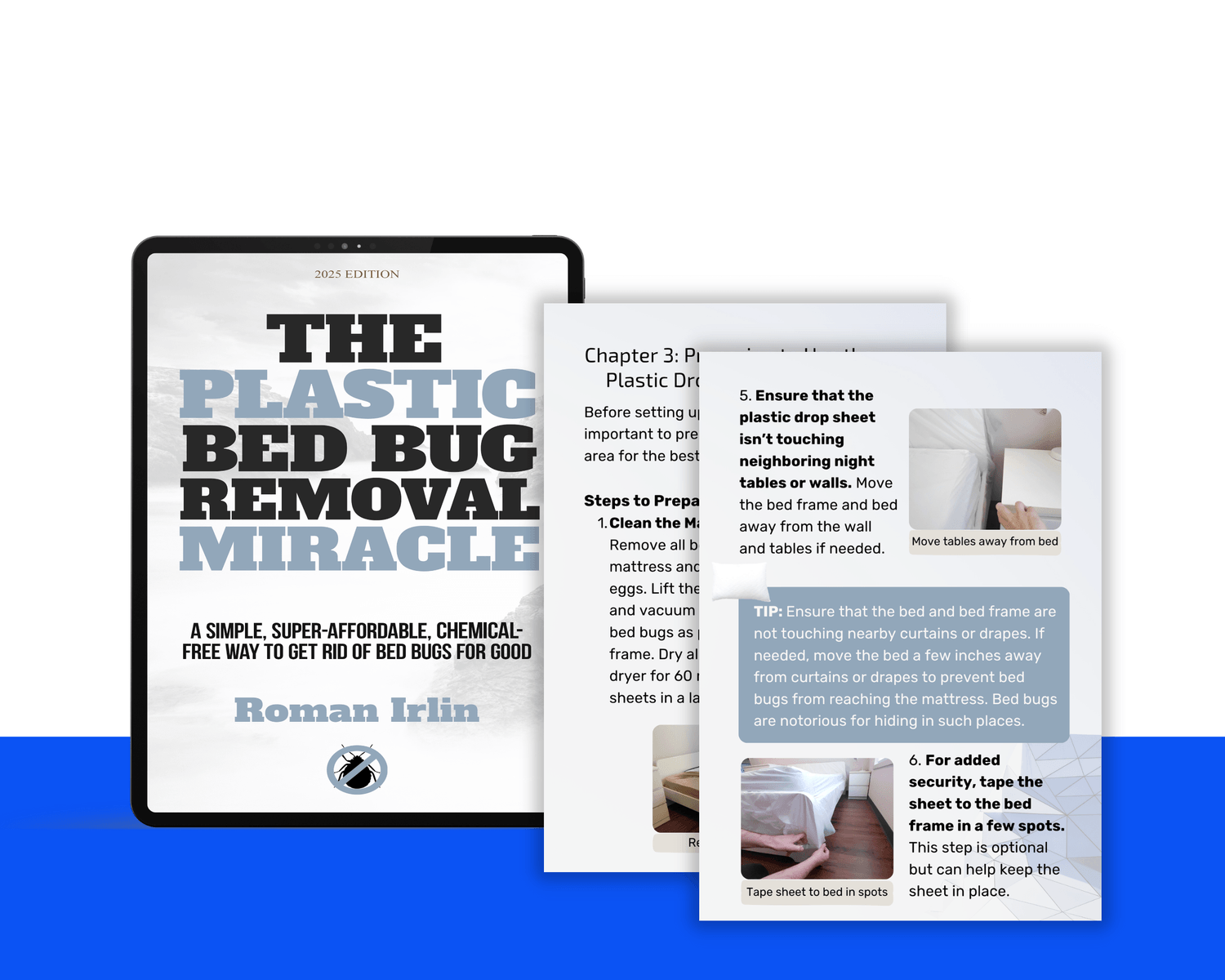
If you want the full reasoning, timelines, monitoring tips, and an easy-to-follow plan that people with limited budgets can implement, our eBook explains the approach in plain language and with photos.
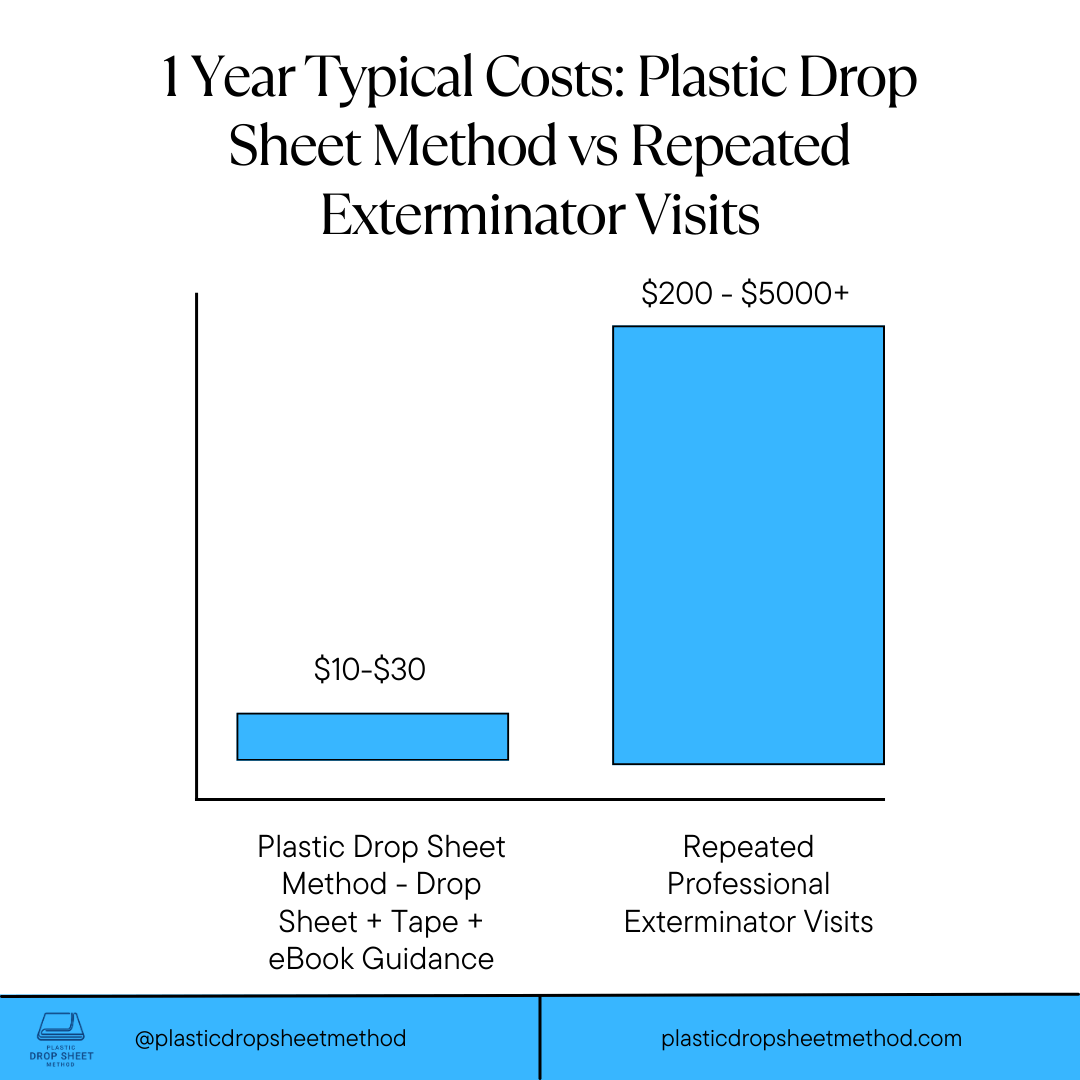
Cost comparison: one-time DIY vs repeated professional treatments
DIY barrier material + eBook guidance: ~ $10–$50 one-time (sheet + tape + eBook).
Professional chemical treatment: $200–$2,000+ per visit depending on home size, with many homes requiring two or many more visits.²
Over time, a low-cost, one-time setup plus basic prevention can be dramatically cheaper than the cycle of repeat professional treatments—especially in multi-unit buildings where re-exposure is common.
Practical next steps that work for small and large homes
1. Inspect and identify where bed bugs are hiding (focus on seams, folds, and furniture joints).¹
2. Contain and block access to the sleeping surface to stop bites immediately (see eBook for the full setup).
3. Reduce clutter and seal gaps so there are fewer hiding spots and fewer routes for spread.
4. Monitor and launder bedding on a schedule to remove hitchhikers; heat-drying at appropriate temperatures is effective for linens.²
5. Coordinate in multi-unit buildings — if neighbors have infestations, work together with property managers to reduce spread.
These steps are scale-friendly: a renter in a studio and a homeowner with multiple bedrooms can apply the same principles adjusted for scale.
Short FAQ
Q: Can budget homes really get rid of bed bugs without chemicals?
A: Yes. A consistent, physical containment strategy combined with regular inspection and good housekeeping can stop feeding immediately and reduce populations over time. For severe cases, patience and consistent application are key.²
Q: How long until I see results?
A: Many people notice fewer or no bites on night one. Population declines typically become measurable within weeks and are often substantial by 2–6 months. Complete eradication timelines depend on infestation size and re-exposure risk.²
This article provides general information about bed bug prevention and non-chemical control strategies. Results vary by situation. For severe or persistent infestations, consult a licensed pest management professional or local public health authority. The information here is not a substitute for professional inspection when required.
Source and further reading
¹University of California Agriculture & Natural Resources. Bed Bugs (IPM). https://ipm.ucanr.edu/home-and-landscape/bed-bugs/. UC IPM
²U.S. Environmental Protection Agency. Do-it-yourself bed bug control. https://www.epa.gov/bedbugs/do-it-yourself-bed-bug-control. Environmental Protection Agency
³Yu, J. J., et al. Insecticide resistance of Cimex lectularius populations. (recent review).PMC
Centers for Disease Control and Prevention. Bed Bugs. https://www.cdc.gov/bedbugs/overview/index.html. CDC



Stay informed with valuable bed bug treatment and prevention tips using the Plastic Drop Sheet Method delivered straight to your inbox.
Copyright © 2025 Plastic Drop Sheet Method
Copyright © 2026 Plastic Drop Sheet Method. All Rights Reserved.